Private Label Felt Products: How to Start Your Own Brand Using Nepal's Handmade Felt Industry
Private labeling means you source a product from a manufacturer and sell it under your own brand name rather than the manufacturer's. The factory makes the product; you brand it, package it.
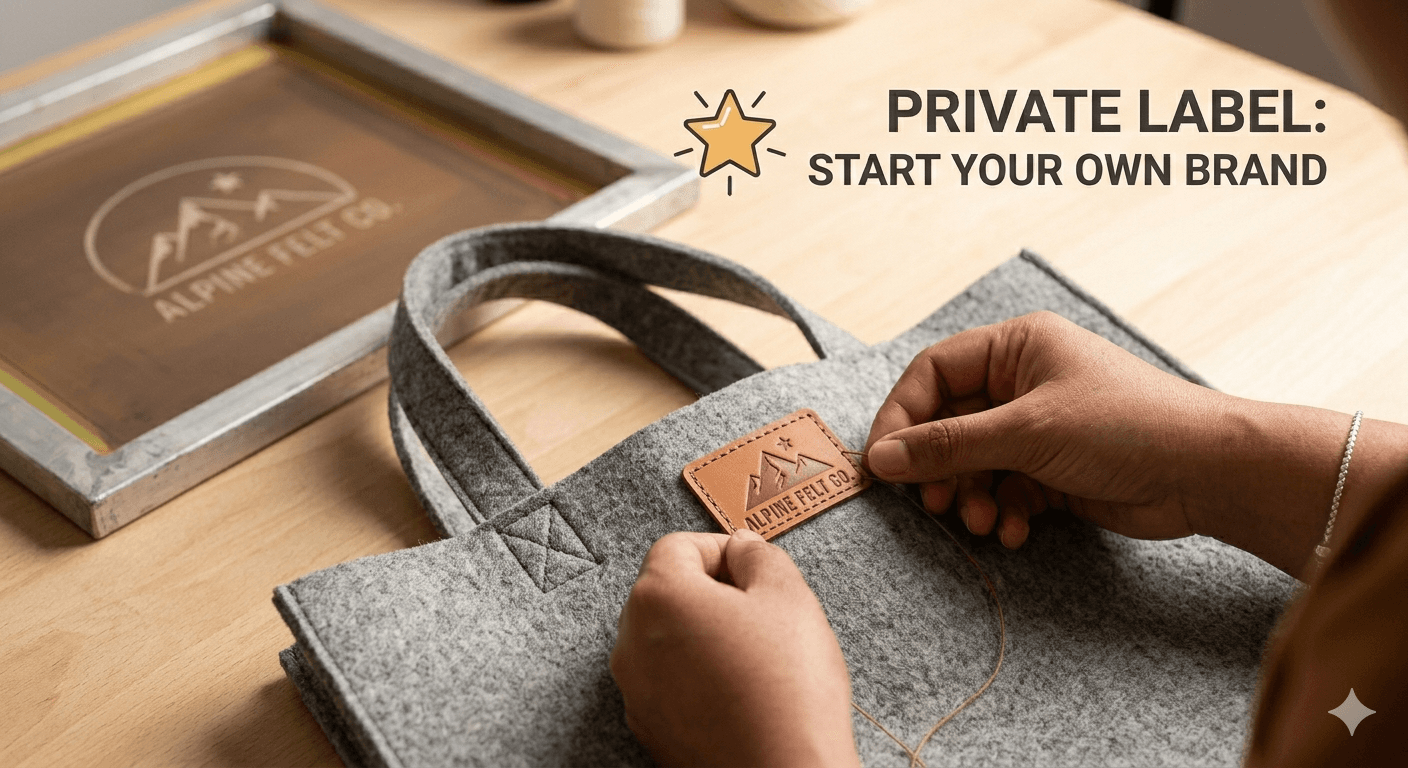
Private Label Felt Products: How to Start Your Own Brand Using Nepal's Handmade Felt Industry — Handmade felt crafting insights from Kathmandu, Nepal
Imagine selling beautifully packaged, premium felt products under your own brand name — with your logo, your colors, and your story. Private label importing from Nepal makes this possible at surprisingly accessible budgets. This guide shows you exactly how to build your own felt product brand from scratch.
What Is Private Label, and Why Does It Matter?
Private labeling means you source a product from a manufacturer and sell it under your own brand name rather than the manufacturer's. The factory makes the product; you brand it, package it, and market it as your own.
You see private label everywhere: Amazon's own brands, boutique candle lines, pet accessory brands on Etsy, and home décor collections sold on independent Shopify stores. Most of them don't manufacture anything — they partner with skilled manufacturers, add branding, and build customer relationships around their brand identity.
For felt products, Nepal is the ideal private label manufacturing partner because:
Products are handmade and inherently unique — your brand gets genuine artisan credibility
Manufacturers are experienced with export and branding requirements
Customization in colors, shapes, sizes, and packaging is widely available
Costs are low enough to maintain excellent margins even with premium branding
"Handmade in Nepal" is a compelling brand story that resonates with today's conscious consumers
This guide walks you through every step of building your own private label felt brand.
Step 1: Define Your Brand Identity Before You Source
The biggest mistake new private label sellers make is jumping straight to product sourcing before they've defined their brand. Your brand identity shapes everything — product selection, color palette, packaging style, target audience, and price positioning.
Answer these questions before approaching any supplier:
Who is your target customer?
Eco-conscious millennial homeowners?
Pet owners who buy premium cat toys?
Parents looking for natural, non-toxic toys for toddlers?
Interior decorators sourcing unique handmade décor?
Holiday shoppers looking for artisan gifts?
What is your brand personality?
Playful and colorful? Minimalist and Scandinavian? Earthy and sustainable? Luxury and artisan?
What is your brand name and visual identity?
You don't need a full brand guide before your first order, but you should have a name, a color palette, and a logo concept.
What is your positioning?
Budget/accessible (compete on price)?
Mid-market (compete on quality + aesthetics)?
Premium/luxury (compete on story, craft, and exclusivity)?
Why this matters for sourcing: Your brand positioning determines how much you invest in packaging, what wool quality you specify, and how you brief your supplier. A budget brand uses standard packaging; a premium brand invests in custom printed boxes, tissue paper, and hand-written notes.
Step 2: Choose Your Product Focus
Don't try to build a private label brand across 15 product categories at launch. Start narrow, build depth, and expand once you've validated demand.
High-performing private label felt product categories in 2026:
Pet Accessories (especially cat toys) The pet products market continues to grow globally. Handmade wool felt cat toys from Nepal are hugely popular because they're natural, safe, and beautifully made. A brand focusing on "natural, artisan pet toys" has genuine market differentiation.
Home Décor & Seasonal Collections Felt rugs, wall hangings, coasters, and seasonal ornaments perform well through boutique retailers, Etsy, and home décor focused Instagram/Pinterest brands. A cohesive seasonal collection (spring pastels, autumn earth tones, winter holiday) creates repeat purchase occasions.
Baby & Children's Products Felt balls, stacking toys, sorting sets, and play mats appeal strongly to parents seeking non-toxic, natural alternatives to plastic. "Montessori-friendly" and "Waldorf-inspired" are powerful keywords in this space.
Sustainable Fashion Accessories Felt bags, hats, and accessories appeal to the eco-fashion market. Positioning around sustainable, handmade, fair trade production is highly marketable.
Craft Supply Bundles Bulk felt balls, sheets, and mixed color sets are popular with the DIY and crafting community. This is a high-volume, subscription-friendly category.
Step 3: Design Your Products and Packaging
This is where your brand comes to life. Work with your supplier to specify every detail.
Product Customization Options
Most experienced Nepal felt manufacturers, including feltandwoolcraft.com, offer:
Color customization:
Specify exact Pantone codes for perfect color matching
Create exclusive colorways that competitors can't replicate
Seasonal palette rotations to keep your collection fresh
Shape and size customization:
Design unique product shapes (custom cutter dies may be required for some products — discuss with your supplier)
Specify exact dimensions down to the millimeter
Material upgrades:
Choose 100% New Zealand merino wool for a premium, ultra-soft product
Specify natural dyes if your brand positioning is around chemical-free or eco-organic
Technique and finish:
Needle-felted details and patterns
Hand-stitched decorative elements
Embroidered logos or text (on bags, purses, wall hangings)
Combination felt + cotton or felt + jute for unique textures
Packaging Design Options
Your packaging is the first physical brand touchpoint your customer experiences. Invest in it.
Options for private label felt packaging:
Custom hang tags: Printed with your brand name, logo, product name, care instructions, and "Handmade in Nepal" story. This is the most common and cost-effective branding element. Minimum quantities are typically 500–1,000 tags, cost is very low.
Branded poly bags: Custom printed transparent or colored bags with your logo. Great for felt balls, cat toys, and small accessories.
Custom printed boxes: For premium positioning — kraft boxes, rigid gift boxes, or folding cartons with your brand printing. Higher cost but dramatically elevates perceived value.
Tissue paper and inserts: Custom tissue paper in your brand colors, plus an insert card with your brand story or a thank-you note. Inexpensive but adds a luxury unboxing feel.
Custom labels: Sticker labels with your logo for application to plain packaging. Budget-friendly entry point into branded packaging.
Eco packaging: Recycled kraft paper, compostable mailers, and soy-ink printed materials — excellent for brands with sustainability positioning.
Creating Your Artwork Files
Your supplier will need print-ready artwork files for any custom printing. Provide:
Logo in vector format (AI, EPS, or SVG)
Brand colors in CMYK values
Hang tag design (front and back) — your supplier may offer a design template
Looking for custom or wholesale handmade felt crafts?
Direct artisan manufacturer in Nepal • 100% pure wool • Low MOQs & worldwide shipping
Any text content (care instructions, material description, country of origin)
If you don't have a designer, platforms like 99designs, Fiverr, or Canva Pro can help you create basic packaging artwork affordably.
Step 4: Request a Branded Sample
Before committing to a full private label order, request a branded sample — a production-quality piece with your actual hang tag, packaging, and branding applied.
This step is non-negotiable for private label. You need to see your brand on the physical product before ordering 500 units.
What to evaluate:
Does your logo reproduce clearly on the hang tag?
Does the packaging represent your brand correctly?
Are the product colors matching your Pantone specifications?
Is the overall unboxing experience what you envisioned?
Make any necessary revisions at this stage. Changes after bulk production are expensive or impossible.
Step 5: Place Your Private Label Production Order
With samples approved, you're ready for bulk production. For private label orders, your order confirmation should specify:
All product specifications (size, color, material, finish)
Packaging specifications (hang tag, bag, box, tissue — all dimensions and printing specs)
Label and tag placement instructions
Quantity per SKU
Delivery deadline
Quality control requirements
Lead times for private label orders: Allow 4–8 weeks for production depending on order size and customization complexity. Custom hang tag printing adds 1–2 weeks if done locally in Nepal; if you're shipping tags from your country, factor in delivery time to the supplier.
Step 6: Build Your Sales Channels
Private label success depends on where and how you sell. Here are the most effective channels for felt product brands:
Amazon (FBA and FBM)
Amazon is the world's largest e-commerce marketplace. Felt products — particularly cat toys, Christmas ornaments, and home décor — have strong demand on Amazon in the USA, UK, Canada, and Germany.
Tips for Amazon:
Register your brand in Amazon Brand Registry using your trademark
Invest in professional product photography with lifestyle images
Optimize your listing title with keywords: "handmade wool felt cat toy," "Nepal felt Christmas ornament," etc.
Use Amazon FBA for Prime eligibility and higher conversion rates
Build your review base carefully through Amazon's Vine program or follow-up emails
Etsy
Etsy is the natural home for handmade, artisan, and unique products. The "Handmade in Nepal" story is perfectly aligned with Etsy's audience.
Tips for Etsy:
Tell your brand story in your shop's About section
Use strong lifestyle photography
Offer personalization options if possible (custom colors, initials on felt bags, etc.)
Target long-tail SEO keywords: "handmade wool felt ball garland nursery decor"
Use Etsy Ads to boost visibility for new listings
Your Own Shopify Store
A branded Shopify store gives you full control over customer experience, data, and margins. It's the foundation of a long-term brand.
Tips for Shopify:
Invest in brand storytelling — share your Nepal manufacturing story with photos and video
Build an email list from day one
Use Instagram and Pinterest to drive traffic
Offer a subscription or "new collection" model to encourage repeat purchases
Boutique Wholesale (B2B)
Many independent gift shops, home décor boutiques, and toy stores actively seek unique handmade products. A simple one-page wholesale catalog and Faire (the wholesale marketplace) can open doors to retail accounts.
Typical boutique wholesale margins:
Your wholesale price: 2–2.5x your landed cost
Boutique retail price: 2–2.5x your wholesale price
Your landed cost of $3 → Your wholesale price $6.50–$7.50 → Retail price $14.99–$18.99
Step 7: Tell Your Brand Story
In 2026, consumers buy brands, not just products. Your Nepal manufacturing story is a genuine competitive advantage — use it.
Story elements that resonate:
The artisan community: Who makes your products? Women-led cooperatives? Multi-generational families?
The craft: How is wool felt made? What does needle felting involve?
Sustainability: Natural wool, low-waste production, non-toxic dyes
Fair trade: How are your artisans paid? What is the impact on their community?
The Himalayas: The origin story of wool, the culture, the tradition
Where to tell your story:
Your website's About page (this is critical)
Product descriptions ("Made by skilled artisans in Kathmandu...")
Social media (behind-the-scenes production photos and videos)
Packaging insert cards
Email marketing sequences
At feltandwoolcraft.com, we are happy to share photos and videos of our production process, artisan team, and workshop to help our private label partners tell authentic brand stories.
How Much Does It Cost to Start a Private Label Felt Brand?
Here's a realistic budget breakdown for a small-scale launch:
ItemEstimated CostProduct samples$50–$150Brand design (logo, hang tag)$100–$500First production order (500 pieces, mixed)$600–$1,500Branded packaging (hang tags, bags)$100–$300Air freight (first shipment)$200–$500Product photography$150–$400Website/Etsy shop setup$50–$200Total estimated startup$1,250–$3,550
For many brands, the initial investment is recovered within the first 2–3 months of sales if the product is positioned correctly and the marketing is active.
Why Build Your Private Label Brand with feltandwoolcraft.com?
We are more than a manufacturer — we are a brand-building partner.
At feltandwoolcraft.com, we've helped hundreds of sellers across the USA, UK, Australia, and Canada launch successful private label felt brands. Our services include:
🎨 Full product customization — colors, shapes, sizes, materials, finishes
🏷️ Private label packaging — hang tags, bags, boxes, inserts
📸 Production photos and video — for your brand storytelling
📦 Low MOQs — launch with as few as 50–100 pieces
🌍 Worldwide export experience — we handle all documentation
🤝 Long-term partnership mindset — we grow with you
📩 Ready to launch your brand? Contact us today → feltandwoolcraft.com
Frequently Asked Questions: Private Label Felt Products
Q: Do I need a registered trademark to start private labeling? No, but registering your brand is a smart long-term step, especially if you plan to sell on Amazon and want Brand Registry access.
Q: Can you put my logo directly on the felt product? Yes! We can embroider logos on felt bags, purses, and larger items, or apply woven labels to appropriate products.
Q: What's the minimum order for private label with your own packaging? Generally 100 pieces for standard hang tag branding. Custom boxes may require 200–500 pieces depending on the box type.
Q: Can I have exclusive designs that competitors can't buy? Yes. For custom-designed shapes or patterns, we can offer exclusivity arrangements. Discuss this with our team.
Q: How do I find a good brand name for a felt product business? Think about your target audience and positioning. Names that evoke natural materials, warmth, craft, or sustainability resonate well — examples: WoolHouse, FeltNest, TheWoolStudio, NaturalNest, AlpineKraft.
Start your private label journey at feltandwoolcraft.com
Looking for Custom or Bulk Handmade Felt Crafts?
We manufacture premium 100% pure New Zealand wool felt products directly in Kathmandu, Nepal. Supporting ethical fair trade, custom OEM branding, low MOQs, and reliable worldwide express shipping.