The Wool Revolution: Why Forward-Thinking Brands Are Ditching Plastic for Handmade Felt in 2026
Discover why brands in 2026 are replacing plastic products with sustainable handmade felt for eco-conscious consumers and modern retail trends.
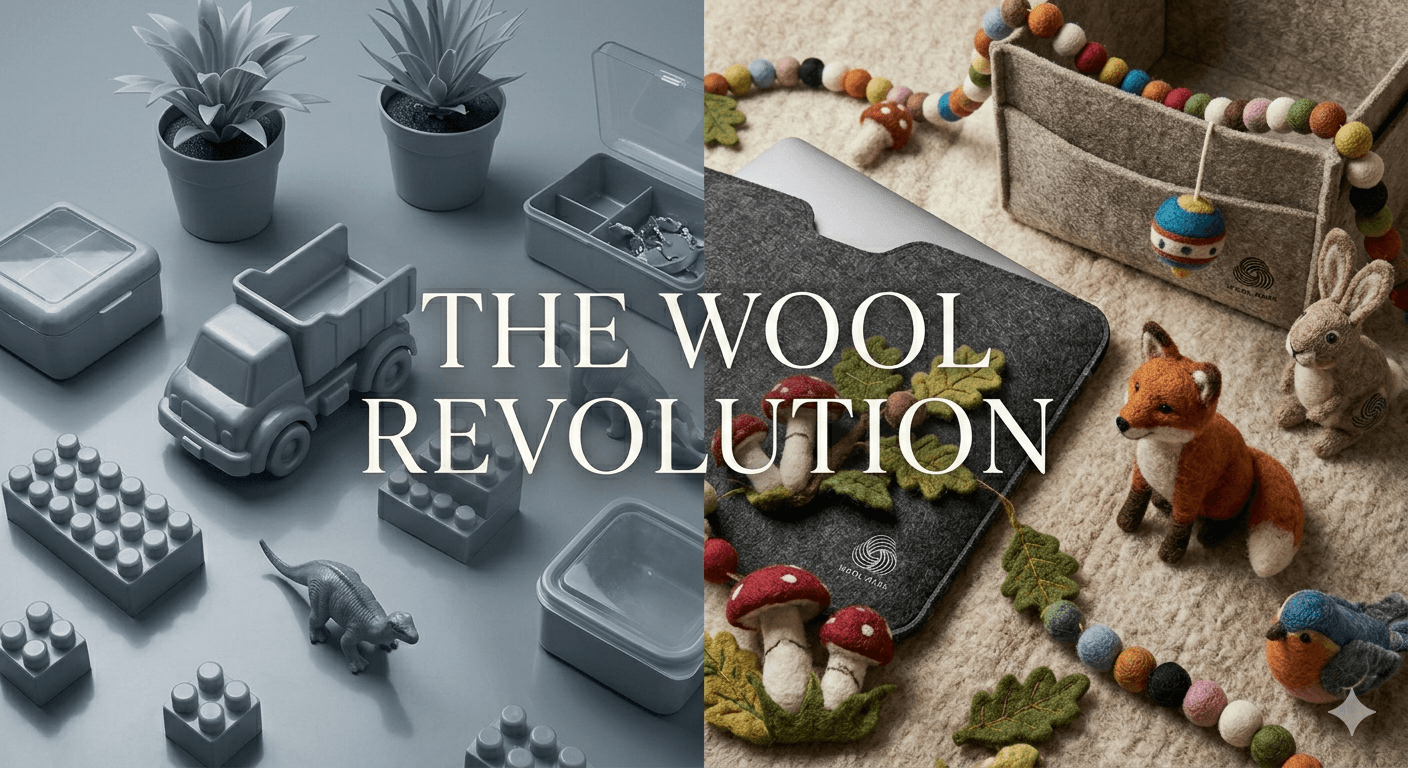
The Wool Revolution: Why Forward-Thinking Brands Are Ditching Plastic for Handmade Felt in 2026 — Handmade felt crafting insights from Kathmandu, Nepal
The Plastic Problem Is No Longer Ignorable
Walk through any product-based business today — a toy store, a corporate gifting supplier, a packaging company — and you'll see the same uncomfortable reality: plastic is everywhere. It's in the packaging, the product itself, the filler, the tag. And in 2026, customers are not just noticing it. They're rejecting it.
Global plastic production crossed 400 million metric tons per year. Less than 10% of all plastic ever produced has been recycled. The rest sits in landfills, floats in oceans, and breaks into microplastics that now show up in human blood. This isn't fringe environmentalism anymore — it's mainstream consumer awareness. A Nielsen study found that 73% of global consumers say they would definitely or probably change their buying habits to reduce environmental impact. Brands that ignore this aren't just missing a trend. They're losing customers to competitors who get it.
This is exactly why the wool felt revolution is happening — not as a niche craft movement, but as a genuine, scalable business pivot that brands large and small are making right now.
What Is Wool Felt, and Why Does It Matter for Business?
Wool felt is one of the oldest textiles in human history, predating even woven fabrics. Unlike synthetic felt (which is made from petroleum-based polyester), natural wool felt is made by matting, condensing, and pressing wool fibers together using moisture, heat, and friction — no weaving, no chemical bonding, no plastic binders.
The result is a dense, durable, completely biodegradable material that has properties plastic can't replicate:
Naturally flame-resistant (wool chars rather than melts)
Sound-absorbing (used in acoustics panels, office dividers)
Temperature-regulating (insulates in cold, breathes in heat)
Biodegradable in 1–5 years (vs. plastic's 400–1000 years)
Dyeable with natural or azo-free dyes for vibrant, lasting color
Carvable, stitchable, glueable — highly versatile for manufacturing
For businesses, these aren't just feel-good facts. They translate directly into product differentiation, premium pricing power, and alignment with where the consumer market is heading.
The Business Case: Why Brands Are Making the Switch
1. Consumer Demand for Sustainable Products Is at an All-Time High
The numbers are hard to argue with. In 2025, the global sustainable goods market was valued at over $150 billion and is growing at a compound annual growth rate (CAGR) of 9.7%. Brands that incorporate eco-friendly materials into their product lines are seeing measurable increases in:
Customer lifetime value — eco-conscious buyers tend to be more loyal
Average order value — customers pay a premium for sustainable products
Word-of-mouth referrals — sustainability is shareable and story-worthy
Felt products check every box on the modern consumer's checklist: handmade, natural, biodegradable, ethically sourced, plastic-free.
2. Corporate ESG Commitments Are Driving B2B Demand
Environmental, Social, and Governance (ESG) reporting is now mandatory or expected for most large corporations in Europe, increasingly required in the US, and adopted voluntarily by forward-thinking brands globally. When companies source corporate gifts, branded merchandise, office accessories, or retail packaging, they need suppliers who can provide:
Materials that are certified sustainable (GOTS, Oeko-Tex, etc.)
Products that count toward carbon offset narratives
Supply chains that are traceable and ethically verified
Wool felt from Nepal, especially when sourced from artisan producers, ticks all of these boxes. It's an exceptional solution for corporate gifting, branded desk accessories, trade show giveaways, and employee welcome kits — all fast-growing segments of the B2B procurement market.
3. Plastic Regulation Is Closing the Cost Gap
One argument that held plastic in place for decades was cost. Plastic was cheap to produce at scale. But that equation is shifting rapidly:
The EU's Single-Use Plastics Directive now bans or levies taxes on a wide range of plastic products
The US, UK, Canada, and Australia have similar legislation progressing through parliaments
Carbon border taxes are starting to price in the environmental cost of synthetic materials
Consumer backlash and PR risk add an invisible "reputational cost" to plastic-heavy supply chains
Meanwhile, felt — especially from Nepal, where skilled artisan labor and raw wool are both abundant — remains competitively priced even at small minimum order quantities (MOQ). The cost gap is narrowing, and in many product categories (gifts, toys, décor), felt already wins on total value when you account for perceived quality and marketability.
4. Felt Products Command Higher Retail Prices and Margins
This is the part that often surprises brand owners: felt products aren't just more ethical — they're more profitable.
A plastic toy truck might retail for $8. A handmade felt toy truck retails for $22–$35. The production cost difference is smaller than the price difference. The felt version carries a story: handmade, eco-friendly, safe for children, supporting artisans. That story is worth money at retail.
The same dynamic plays out across categories:
Plastic pen holder (office): $6–$10 retail | Felt pen holder: $18–$35 retail
Plastic ornament: $2–$4 retail | Felt ornament: $8–$20 retail
Plastic bag insert: $1–$3 | Felt pouch: $7–$18 retail
For brands, this means better margins, better positioning, and better customer perception — all from switching the core material.
Key Industries Making the Felt Shift
Children's Toys and Early Learning
This is the highest-impact and fastest-growing category for the plastic-to-felt transition. Parents of young children are acutely aware of what materials their kids put in their mouths, play with daily, and are exposed to. Microplastic contamination concerns have made many parents actively avoid plastic toys for infants and toddlers.
Looking for custom or wholesale handmade felt crafts?
Direct artisan manufacturer in Nepal • 100% pure wool • Low MOQs & worldwide shipping
Felt toys — animals, food sets, stacking rings, play food, finger puppets — are not just safer. They're warmer, softer, more tactile, and more imaginative. Child development experts note that open-ended, texture-rich toys support better cognitive development than hard plastic alternatives.
Brands and retailers targeting the 0–6 age group are rapidly expanding their felt toy lines, and wholesale demand for custom felt toys from manufacturers like those in Nepal is growing year over year.
Corporate Gifting and Branded Merchandise
The corporate gifting industry is worth over $258 billion globally. For years, it was dominated by plastic-heavy items — USB drives, cheap mugs, branded pens in plastic cases. The shift toward premium, purposeful, sustainable gifts is reshaping the entire industry.
Felt products are uniquely suited to this space:
They photograph beautifully (critical for corporate gift catalogs)
They can be customized with logos, colors, and messaging
They feel premium without requiring premium price points at wholesale
They tell a sustainability story that aligns with corporate values
Custom felt desk organizers, branded coasters, felt laptop sleeves, holiday gift sets in felt packaging — these are items that corporate buyers are actively seeking out in 2026.
Retail Packaging and Product Accessories
Brands in the beauty, spirits, jewelry, and lifestyle space are switching from rigid plastic inserts and packaging components to felt alternatives. A felt ring box insert, a felt wine bottle bag, a felt cosmetics pouch — these upgrades elevate perceived product quality while reducing plastic waste.
Premium felt packaging has a tactile quality that plastic simply cannot match. When a customer receives a product and feels the weight and texture of natural felt, the brand value is communicated before they've even opened the product.
Why Nepal Is the Heart of the Global Felt Industry
No conversation about felt as a business material is complete without talking about Nepal. The country has established itself as the world's premier source for handmade wool felt products — and there are deep, structural reasons for this.
Nepal sits at the intersection of:
Abundant raw wool supply from Himalayan sheep and Tibetan-breed animals
Generations of artisan skill in wool processing, felting, and natural dyeing
Fair trade and cooperative networks that ensure ethical production
Lower cost structures that allow competitive wholesale pricing even at small MOQs
A cultural tradition of craft that brings genuine artistry to every product
Kathmandu Valley, in particular, has become a hub for felt exporters who work with international buyers across the US, Europe, Australia, and Japan. Products range from simple felt balls and coasters to highly complex custom toys, architectural acoustic panels, and fashion accessories.
For brands looking to source sustainable felt products, Nepal offers something rare: the combination of authenticity, quality, scalability, and fair pricing that is very difficult to find in any other single sourcing location.
How to Start Transitioning Your Product Line to Felt
If you're a brand owner, retailer, or product developer reading this, here's a practical roadmap for beginning the switch from plastic to felt:
Step 1: Identify Your Highest-Impact Category
Start with the products where the plastic-to-felt switch is easiest and most visible to customers. Packaging inserts, gift accessories, and small toys are typically the lowest-barrier starting points. You don't have to replace your entire product line — start where the story is strongest.
Step 2: Request Samples Before Committing to MOQs
Reputable felt manufacturers in Nepal offer sample orders. Always request samples in your target colors, thicknesses, and constructions before placing a bulk order. Evaluate:
Color fastness (does the dye bleed when wet?)
Density and firmness (appropriate for your product use case?)
Stitching quality on sewn components
Dimensional accuracy (critical for accessories that need to fit precisely)
Step 3: Understand Certification Options
If your brand makes sustainability claims, you may want suppliers who can provide:
GOTS Certification (Global Organic Textile Standard) — for organic wool
Oeko-Tex Standard 100 — certifies no harmful substances in the final product
Fair Trade Certification — verifies ethical labor practices
Wool Mark — for premium quality Australian/Himalayan wool
Not every supplier will have all of these, but any credible manufacturer should be able to provide documentation and transparency about their materials and labor practices.
Step 4: Build the Story Into Your Marketing
The switch to felt is not just an operational decision — it's a marketing asset. Document it. Tell customers exactly what changed, why it changed, and what it means for them and the planet. Sustainability storytelling drives engagement, earns media coverage, and builds the kind of brand loyalty that plastic products never could.
Common Objections — Answered
"Felt is less durable than plastic." Not true for quality wool felt. Dense, tightly compressed felt can outlast thin plastic components significantly. Felt bags, cases, and accessories routinely last years with normal use. And when felt does eventually wear out, it biodegrades. When plastic wears out, it creates waste.
"Felt is too expensive for our price point." This depends entirely on your sourcing and product category. At wholesale from Nepal, felt products are often priced competitively with mid-range plastic alternatives. And because felt commands higher retail prices, your margin can actually improve even if your COGS increases slightly.
"Our customers don't care about sustainability." This is the most outdated objection in the book. In 2026, sustainability is no longer a niche preference — it's a baseline expectation, especially among Millennial and Gen Z buyers who now control the majority of consumer spending.
"We can't get the volumes we need from artisan producers." Nepal's felt industry has scaled significantly. Many manufacturers work with orders ranging from 50 pieces to 50,000+ pieces. The key is finding the right manufacturer and building the relationship over time.
The Bottom Line: This Isn't a Trend. It's a Transition.
The shift from plastic to natural, handmade materials like wool felt is not a fad. It is a structural, permanent transition in how consumer products are made, marketed, and perceived. The brands that are moving now — updating their supply chains, their product lines, and their brand stories — are positioning themselves to lead their categories for the next decade.
The brands that are waiting? They're going to spend the next five years playing catch-up.
Wool felt is available, scalable, beautiful, and better for the planet. The only question is: how much longer can your brand afford to wait?
Frequently Asked Questions
What industries use felt products most? Toys and early learning, corporate gifting, retail packaging, home décor, fashion accessories, acoustic panels, and pet products are currently the highest-volume categories.
Is wool felt safe for children? Yes. Natural wool felt is non-toxic, free from hard edges, and hypoallergenic for most children. It is one of the safest materials available for infant and toddler toys.
Can felt products be customized with logos? Yes. Felt can be embroidered, laser-cut, screen-printed, and custom-dyed to specific Pantone colors. Most Nepal-based manufacturers offer full customization services.
What is the typical MOQ for custom felt products? Many Nepal manufacturers accept MOQs of 50–200 pieces per design, making felt highly accessible for startups and small brands.
How long does it take to produce custom felt products? Standard production timelines range from 2–6 weeks depending on complexity and order volume, plus shipping time (typically 2–4 weeks by sea freight).
Looking to source handmade felt products for your brand? Felt and Wool Craft for wholesale pricing, samples, and custom production inquiries.
Tags: felt products wholesale, eco-friendly business materials, sustainable product sourcing, handmade felt Nepal, plastic alternative for brands, wool felt manufacturer, custom felt products B2B
Looking for Custom or Bulk Handmade Felt Crafts?
We manufacture premium 100% pure New Zealand wool felt products directly in Kathmandu, Nepal. Supporting ethical fair trade, custom OEM branding, low MOQs, and reliable worldwide express shipping.