Do Cats Actually Like Felt Cat Caves? What Vets and Owners Say
Do cats really love felt cat caves, or is it just marketing? Here's what vets, behaviorists, and real owners say about enclosed wool beds.
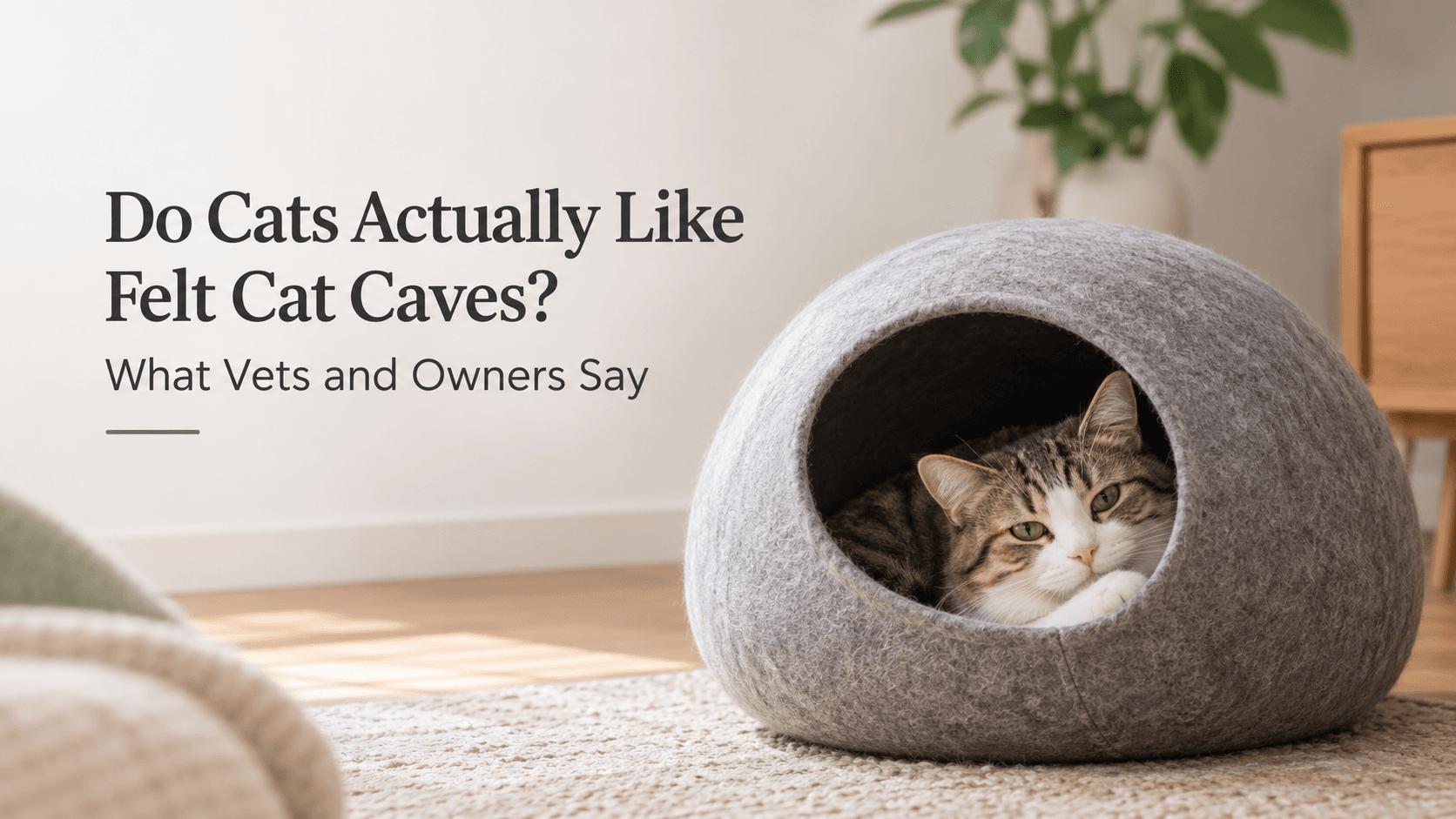
Do Cats Actually Like Felt Cat Caves? What Vets and Owners Say — Handmade felt crafting insights from Kathmandu, Nepal
Scroll through any cat product page and you'll see felt cat caves described as something cats "instinctively love." It's a bold claim for a product, so it's fair to ask whether that's genuine feline behavior or just good marketing copy. The short answer: it's mostly real, backed by actual research into cat behavior, but it's not quite universal. Here's what's actually going on.
Why Cats Are Wired to Love Enclosed Spaces
This isn't really about the cave itself — it's about instinct. In the wild, cats are both predator and prey, and enclosed spaces have always meant safety: a place to rest without being seen, ambush prey, or retreat from a threat. That instinct hasn't disappeared just because your cat's biggest daily threat is the vacuum cleaner.
This shows up in actual research, too. A study published in Applied Animal Behaviour Science found that giving shelter cats access to a hiding box measurably lowered their stress levels after arriving in a new environment — a meaningful finding, since new environments are one of the most stressful experiences a cat can go through. The instinct to seek out a small, enclosed space to feel safe isn't a personality quirk; it's baked into the species.
What Vets and Behaviorists Say
Veterinarians who work with cat behavior tend to agree on the core idea, even if they phrase it differently. Veterinarian Dr. Jane Bicks has pointed out that cats are territorial animals that need a safe, designated space of their own, and that having one — like a cat cave — can meaningfully reduce stress and anxiety. Animal behaviorist Dr. Karen Becker has made a similar point, noting that a cave-like enclosed bed taps into a cat's natural instinct to seek out something that feels like a burrow.
The consensus from the behavior side isn't "cats need a fancy bed" — it's that cats benefit from having some enclosed, private space to retreat to, and a felt cave happens to be a very good version of that.
What Owners Actually Report
Anecdotally, this tracks with what most cat owners already know from experience: cats that pounce out of cardboard boxes, disappear under the bed during vacuuming, or nap behind the couch are showing the exact same instinct a cat cave is designed around. Owners of that kind of cat tend to report their cat adopting a felt cave almost immediately, often napping in it for hours at a stretch, especially in colder months when the enclosed shape helps trap body heat.
There's also a smaller, more specific reason wool felt caves in particular tend to get adopted fast: wool naturally contains lanolin, a mild natural oil with a distinct scent that many cats are drawn to. It's not the deciding factor on its own, but it seems to help felt caves win cats over faster than caves made from synthetic materials.
Why Felt Specifically Works Well
Beyond the shape, the material itself pulls some weight. Wool felt insulates well, staying warm in winter without turning into an uncomfortable heat trap in summer, and it naturally resists trapping dust and odor the way some synthetic plush fabrics do — which makes upkeep considerably easier. It also holds its shape well, so the "den" structure a cat is drawn to doesn't collapse or flatten out the way a soft cushioned bed can over time.
Looking for custom or wholesale handmade felt crafts?
Direct artisan manufacturer in Nepal • 100% pure wool • Low MOQs & worldwide shipping
The one honest caveat: cats that love to knead or scratch at their bedding can wear down felt faster than a fully scratch-resistant fabric. It's a durable material, just not an indestructible one.
Not Every Cat Is a Hider — And That's Fine
Here's the part most product pages leave out: this instinct isn't universal. Some cats are natural sunbathers who'd rather sprawl out on an open, flat surface in a patch of sunlight than tuck themselves into an enclosed space. Neither preference is "wrong" — it just comes down to individual personality.
Likely to love a cave | Might prefer an open bed |
|---|---|
Hides under furniture during loud noises | Rarely hides, even during vacuuming or guests |
Pounces out of boxes or bags | Prefers stretching out in open, sunny spots |
Seeks out closets, cabinets, or tight corners | Sleeps in the open, often in plain sight |
Gets stressed by household chaos or new people | Stays relaxed and social most of the time |
What to Look for If You're Buying One
If your cat's behavior lines up with "likely to love a cave," a few practical details make a real difference: size it so your cat can comfortably turn around inside (roughly 15–16 inches in diameter for an average cat, larger for bigger breeds), and place it somewhere quiet, away from the busiest foot traffic in the house. A cave shoved in the middle of a loud living room won't deliver the same stress relief as one tucked into a calm corner.
So, do cats actually like felt cat caves? For the majority of cats, yes — it taps into an instinct that's older than domestication itself, and both the behavioral research and the day-to-day reports from owners back that up. It's just not guaranteed for every single cat, which is really the only honest caveat worth making before you buy one.
Looking for Custom or Bulk Handmade Felt Crafts?
We manufacture premium 100% pure New Zealand wool felt products directly in Kathmandu, Nepal. Supporting ethical fair trade, custom OEM branding, low MOQs, and reliable worldwide express shipping.