How to Import Felt Products from Nepal: A Complete Step-by-Step Guide for Wholesale Buyers
If you're a retailer, boutique owner, Etsy reseller, or Amazon FBA seller looking to source high-quality handmade felt products, Nepal is one of the best-kept secrets in global wholesale. This guide w
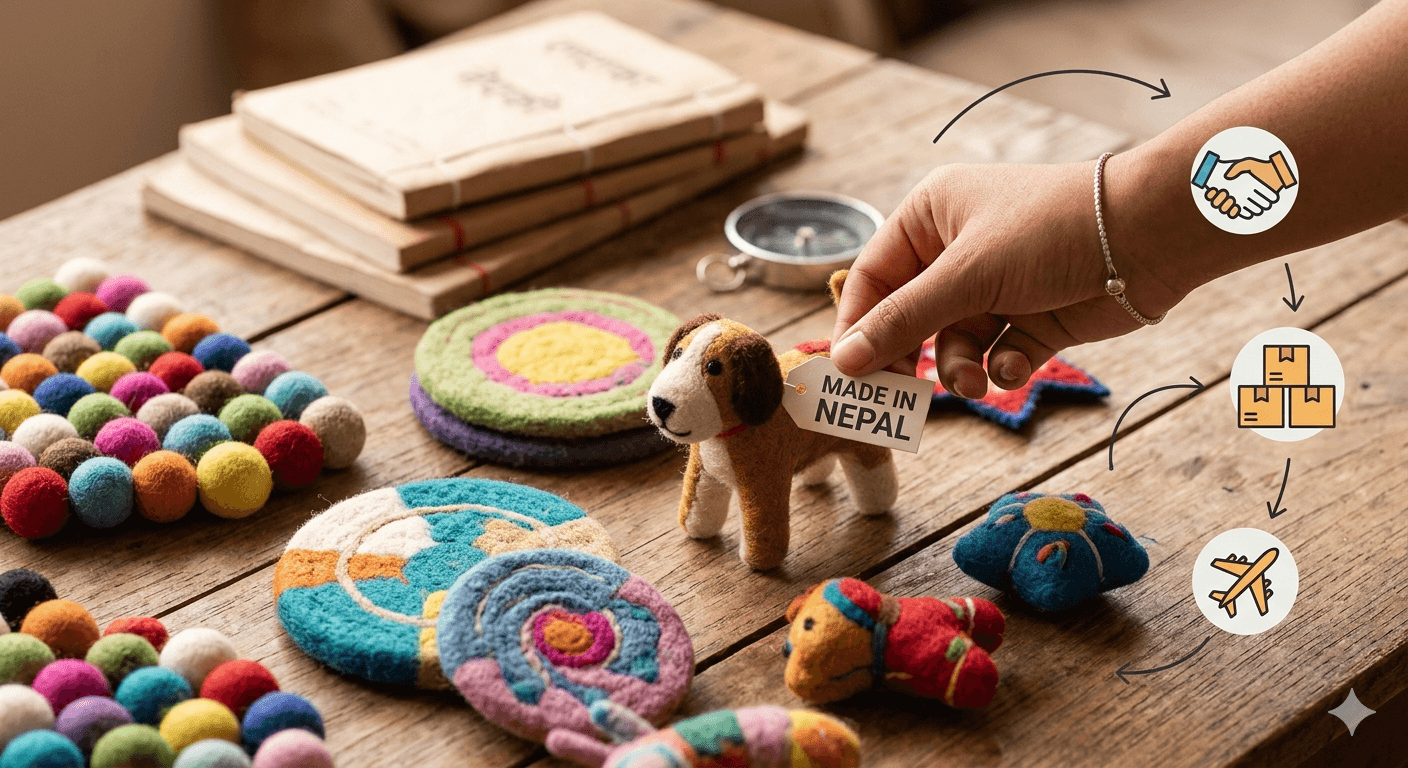
How to Import Felt Products from Nepal: A Complete Step-by-Step Guide for Wholesale Buyers — Handmade felt crafting insights from Kathmandu, Nepal
If you're a retailer, boutique owner, Etsy reseller, or Amazon FBA seller looking to source high-quality handmade felt products, Nepal is one of the best-kept secrets in global wholesale. This guide walks you through every step — from finding the right supplier to clearing customs — so you can start importing Nepali felt products with confidence.
Why Nepal Is the World's #1 Source for Handmade Felt Products
Nepal has been producing wool felt for centuries. Nestled in the Himalayas, the country has an abundant supply of raw merino and sheep wool, generations of skilled artisan families, and a government that actively supports handicraft exports. Today, Nepal exports felt products — including felt balls, felt rugs, felt ornaments, felt bags, felt wall hangings, and cat toys — to the USA, UK, Australia, Canada, Germany, and beyond.
Here's why importers keep coming back to Nepal:
Price advantage: Labor costs in Nepal are significantly lower than in Europe or North America, allowing you to import at 3x–8x lower cost than retail.
Handmade quality: Every product is hand-felted by skilled artisans, making each piece unique and highly marketable.
Customization: Nepali manufacturers are highly flexible with colors, sizes, shapes, and private label branding.
Ethical sourcing: Nepal's felt industry is largely women-led, fair trade certified, and environmentally responsible — a strong selling point for conscious consumers in Western markets.
Export infrastructure: Nepal has well-established export procedures, customs documentation experience, and freight partnerships with DHL, FedEx, and sea freight carriers.
If you want to build a profitable product line around handmade, sustainable, and unique home décor or pet products, importing from Nepal is one of the smartest moves you can make in 2026.
Step 1: Identify the Felt Products You Want to Import
Before reaching out to any supplier, get clear on your product category. Nepal produces a wide range of felt items, and knowing what you want helps you find the right manufacturer and negotiate better pricing.
Popular felt product categories exported from Nepal:
Felt balls and garlands — used for home décor, nurseries, and craft supplies
Felt rugs and floor mats — handmade, colorful, and highly sought after in the home décor market
Felt cat toys and pet accessories — one of the fastest-growing e-commerce categories
Felt Christmas ornaments and holiday décor — seasonal bestsellers in the USA and Europe
Felt bags and purses — eco-friendly fashion accessories
Felt wall hangings and art panels — trendy in Scandinavian-style interiors
Felt coasters, trivets, and table décor — popular in boutique kitchenware stores
Felt plant pots and baskets — a rising trend in sustainable home goods
Pro Tip: Start with 2–3 product lines before expanding. This makes quality control easier and your initial investment manageable.
Step 2: Find a Reliable Felt Supplier in Nepal
This is the most critical step. Your supplier relationship will determine your product quality, delivery timelines, and long-term profitability.
Where to find Nepali felt suppliers:
1. Direct manufacturer websites Companies like feltandwoolcraft.com are direct manufacturers based in Nepal. Buying directly means no middlemen, better pricing, and direct communication about customization.
2. Trade platforms Sites like Alibaba, Global Sources, and Faire list Nepali felt exporters. Always verify that the listing is for a Nepal-based manufacturer and not a reseller based in a third country.
3. Trade fairs The Handicraft & Gifts Fair in Kathmandu (organized by FHAN — Federation of Handicraft Associations of Nepal) is one of the best places to meet verified manufacturers in person.
4. Referrals and communities Facebook groups like "Wholesale Handmade Nepal" and Etsy seller forums often have firsthand supplier recommendations from other importers.
What to look for in a supplier:
Minimum 3–5 years of export experience
Positive reviews or references from buyers in your target country
Clear communication in English
Ability to provide product samples
Fair trade or WFTO certification (preferred but not always required)
Transparency about production capacity and lead times
Red flags to avoid:
Suppliers who can't provide a sample before bulk orders
Vague or evasive answers about production location
No verifiable business address or registration
Unrealistically low pricing (often a sign of poor quality or hidden costs)
Step 3: Request Samples and Evaluate Quality
Never place a bulk order without first ordering samples. This protects you from expensive mistakes and helps you assess whether the supplier is truly capable of meeting your standards.
What to check in a felt product sample:
Wool quality: Is it 100% New Zealand wool or merino? Or is it mixed with synthetic fibers? Pure wool felt is denser, softer, and more durable.
Felting consistency: Are the fibers tightly and evenly felted, or do you notice loose areas?
Color accuracy: Do the colors match the photos or Pantone codes you requested?
Finishing: Are edges clean? Is stitching (if any) even and tight?
Size accuracy: Measure against the specifications you provided.
Odor: Genuine wool has a faint natural scent — strong chemical smells indicate chemical treatment or synthetic mixing.
Most reputable Nepali suppliers charge a small sample fee (usually $20–$60 for a few pieces) that is often deducted from your first bulk order. This is standard practice.
Tip: Always request samples in the specific colors and sizes you plan to sell. Don't approve a bulk order based on a sample in a different colorway.
Step 4: Negotiate Pricing, MOQ, and Payment Terms
Once you're satisfied with sample quality, it's time to discuss commercial terms.
Minimum Order Quantities (MOQ): Most Nepal felt manufacturers have MOQs ranging from 50 to 500 pieces per design, depending on the product type. Felt rugs and larger items typically have lower MOQs (10–50 pieces), while felt balls and small accessories may require 100–500 pieces due to production efficiency.
Pricing: Pricing varies by product complexity, wool type, and order volume. As a general benchmark:
Felt balls (3cm): $0.10–$0.30 per piece in bulk
Felt cat toys: $0.50–$2.00 per piece
Felt Christmas ornaments: $0.80–$3.00 per piece
Felt rugs (2x3 ft): $15–$35 per piece
Felt wall hangings: $8–$25 per piece
Payment terms: The standard in Nepal's export industry is 30–50% advance payment, with the balance paid before shipment or upon receipt of shipping documents. For new suppliers, 50% advance is common. As trust builds, you may negotiate better terms.
Accepted payment methods:
Bank wire transfer (T/T) — most common
PayPal (some suppliers; may include a service fee)
Western Union (less preferred for larger amounts)
Letter of Credit (LC) — for large orders
Looking for custom or wholesale handmade felt crafts?
Direct artisan manufacturer in Nepal • 100% pure wool • Low MOQs & worldwide shipping
Step 5: Confirm Production Details and Place Your Order
Before your order enters production, make sure everything is documented in writing.
Your order confirmation should include:
Product name, description, and item code
Quantity per SKU
Colors (specify Pantone codes if possible)
Sizes and dimensions
Packaging requirements (bulk, individual bags, custom hang tags, etc.)
Delivery deadline
Total order value and payment schedule
Quality control terms
Request production photos at the midpoint and completion of your order. Reputable suppliers will happily share these.
Step 6: Understand Shipping Options from Nepal
Nepal is a landlocked country, so all international shipments go via air freight or road transport to India (Kolkata or Mumbai seaport) before connecting to sea freight.
Shipping options:
Air Freight (Air Cargo)
Fastest option: 3–7 business days to USA/Europe
Best for: Small to medium orders (under 100 kg), time-sensitive shipments, first orders
Carriers: DHL, FedEx, UPS, EMS
Cost: $5–$12 per kg depending on carrier and destination
Sea Freight (LCL or FCL)
Slower: 30–50 days to USA/Europe (via India seaport)
Best for: Large bulk orders (500+ kg), cost-sensitive shipments
Cost: Much lower per kg than air freight, but involves additional inland transport from Nepal to India
LCL (Less than Container Load) is available for orders that don't fill a full container
EMS Nepal Post
Budget option for smaller packages
7–14 business days, less reliable tracking
Best for: Sample orders or very small quantities
Who handles the logistics? Most experienced Nepali exporters have established relationships with freight forwarders who manage the entire shipping process, including customs export documentation from Nepal.
Step 7: Understand Import Duties and Customs Clearance
When your goods arrive in your country, they must clear customs. Here's what you need to know for major import destinations:
USA (importing from Nepal):
Most handmade felt and wool products fall under HTS codes 5602 (felt) or 9503 (toys) or 6304 (home textiles)
Nepal benefits from the Generalized System of Preferences (GSP) — some categories may be duty-free
You'll typically need: Commercial Invoice, Packing List, Bill of Lading/Airway Bill, Certificate of Origin
For shipments under $800: De Minimis threshold — no duty or formal entry required
For shipments over $2,500: Formal entry through a licensed customs broker is recommended
UK:
Nepal has trade agreements that offer reduced duty rates on handicrafts
Standard import VAT applies (20%), reclaimed if VAT registered
Canada:
Nepal enjoys preferential tariff rates under Canada's General Preferential Tariff (GPT)
Duties on wool felt products are typically 0–12%
Australia:
Developing Country tariff preference applies to Nepal — many categories are duty-free
Pro Tip: Work with a licensed customs broker in your country, especially for your first few shipments. They'll ensure proper classification and prevent costly delays or penalties.
Step 8: Receive, Inspect, and List Your Products
When your shipment arrives, don't just put it straight on shelves or list it online without inspection.
Incoming quality check:
Count all pieces against the packing list
Inspect a random sample (at minimum 10–20%) for quality issues
Check packaging and labeling
Document any issues with photos and report to your supplier within 48–72 hours
Listing tips for felt products:
Emphasize "handmade in Nepal" — this is a major selling point
Use lifestyle photography against clean, bright backgrounds
Highlight the wool type (100% New Zealand wool, merino, etc.)
Mention eco-friendly and fair trade aspects if applicable
Include size variations clearly
Common Mistakes First-Time Felt Importers Make (And How to Avoid Them)
1. Skipping samples — Always test quality before committing to bulk.
2. Not confirming packaging requirements — If you're selling on Amazon, your packaging must meet specific requirements. Communicate this upfront.
3. Ignoring lead times — Handmade products take 3–8 weeks to produce. Don't order seasonal products 2 weeks before the season starts.
4. Choosing the cheapest supplier — Quality drops fast when suppliers cut corners on wool grade. The cheapest quote often becomes the most expensive mistake.
5. Not accounting for total landed cost — Your product cost is not just the factory price. Add shipping, duties, customs broker fees, and packaging to calculate your true cost per unit.
6. No written agreement — Always have your order details, quality standards, and delivery terms in writing.
Why Buy from feltandwoolcraft.com?
At feltandwoolcraft.com, we are a direct manufacturer based in Kathmandu, Nepal with over a decade of experience exporting premium handmade felt products to the USA, UK, Canada, Australia, and Europe.
Here's what sets us apart:
✅ 100% handmade using pure New Zealand wool
✅ Low MOQs to support small businesses and startups
✅ Full private label and custom design services
✅ Experienced export team handling all documentation
✅ Regular production updates with photos and videos
✅ Competitive wholesale pricing with transparent cost breakdowns
✅ Trusted by 500+ wholesale buyers worldwide
📩 Ready to start your import journey? Contact us at feltandwoolcraft.com to request a product catalog, samples, or a custom quote.
Looking for Custom or Bulk Handmade Felt Crafts?
We manufacture premium 100% pure New Zealand wool felt products directly in Kathmandu, Nepal. Supporting ethical fair trade, custom OEM branding, low MOQs, and reliable worldwide express shipping.